

AI data centers are overheating traditional cooling models
February 20, 2026 Source: ASM International
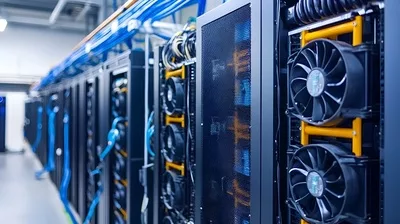
AI data centers are breaking traditional cooling models. Vendors are responding by accelerating the shift to liquid cooling as air-based cooling struggles with keeping pace with rising power densities. As a result, service-based models like cooling-as-a-service (CaaS) are emerging but not everyone agrees outsourcing cooling is the right answer.
Liquid cooling is key to why data centers are stressing infrastructure as AI workloads produce more heat due to higher compute density. Cooling can account for 30% to 50% of a data center’s total electricity use. This amplifies pressure on power grids and on-site infrastructure.
This puts massive pressure on how firms install and deploy chillers, fans, pumps and overall cooling control systems. Because of this, vendors are experimenting with new ways to offer cooling that might relieve some of this pressure.
Vendors are experimenting with new cooling model as the cost, complexity and deployment timelines of liquid cooling systems increasingly rival the IT infrastructure itself. One way around this cost may be through the idea of outsourcing cooling through CaaS.
“As AI racks push far greater power densities into the same footprint, cooling shifts from being merely a data hall utility to a core reliability and capacity issue,” said Paul Overbeck, corporate accounts manager at Ecolab. CaaS supports less internal lift, fast time-to-capacity, a hedge against downtime and clear performance accountability, Overbeck said.
The main benefits of CaaS are:
- Reduction of capital and financial risk
- Performance guarantee
- Access to modern technology
- Scalability and flexibility
- Environmental benefits
Specifically, operators do not have to front the expensive cooling hardware, instead paying operating expenses for the service. The data centers also get access to the latest cooling systems as they emerge without paying to constantly upgrade. And the service works across large or small data centers and can be expanded as growth happens.
“It speeds deployment, centralizes responsibility for performance and compliance and pairs equipment with ongoing monitoring and field service so customers get predictable thermal performance and can focus on their core business,” Overbeck said.
Ecolab is a CaaS provider that extends beyond direct-to-chip cooling as it includes both the facility environment and individual technology loops. This allows operators to have visibility immediately into fluid condition and early warning of drift or contamination, Overbeck said.
Market research firm Research Intel forecasts the global market for CaaS to reach $10.7 billion by 2033, expanding at a 14.2% compound annual growth rate (CAGR) from 2025 to 2033. In 2024, CaaS market was valued at $3.2 billion.
Research Intel said CaaS adoption may vary widely by region and data center size. The technology could address the adoption gaps among small- and medium-sized enterprises and data centers that do not have the capital to support full-scale cooling.
Despite growing interest, not everyone is convinced that CaaS is a long-term solution. The reasons being:
- Regulatory uncertainty
- Raw material price volatility
- Lack of standardized service models
- Complexity in existing infrastructure
- Shortage of skilled labor
These challenges will require ongoing investment in CaaS technology, workforce development and collaboration for standardized service models that could hinder adoption. Others argue outsourcing cooling may address symptoms, rather than root causes.
“Outsourcing cooling operations may be like outsourcing daily teeth brushing to your dentist: theoretically possible, but impractical,” said Baratunde Cola, CEO and founder of Carbice, a a materials company that develops thermal interface solutions to improve heat dissipation and reliability in data centers and other sectors.
Cola said while the model has merit in building concentrated expertise, it presents significant business challenges. Specifically, the industry is already moving in this direction through industrial reference designs and standards. OEMs will likely have to absorb much of the costs as well.
“I’m not convinced there’s enough margin or willingness to pay to support this as a standalone business, especially given insurance costs,” Cola said. “It could work if managed through OEM equipment providers, but in my view, cooling itself isn’t the core problem. It’s the supply chain, maintenance and speed to market that need to be addressed.”
Both CaaS from Ecolab and Carbice’s thermal interface materials are responses to the same core challenge in modern AI data centers: How to manage heat efficiency, cost effectively and reliably.
However, both seek to improve thermal management in different ways. CaaS is outsourcing the infrastructure so data operators can reduce capex risk and keep up to date with the latest technology. While Carbice’s technology focuses on the point where heat-generating meets cooling hardware.
Both aim to reduce the costs of heat removal but at different levels of the system.
Both approaches will likely coexist. The real question may not be which approach wins or is best, but how quickly operators can integrate multiple layers of thermal innovation fast enough to keep pace with AI data centers.
Image – Liquid cooling systems for AI data centers is stressing infrastructures leading to companies introducing outsourced cooling methods to meet demand and save capital. Courtesy of: Heng Heng/Adobe Stock.
For more information:
GlobalSpec
https://electronics360.globalspec.com/
Subject Classifications
Costs and economics
Electronics
Environmental Impacts
Industries and Applications
news
News Articles
Thermal Properties


