


Heat treated bar and forging steels remain the major material for parts (such as shafts, gears, bearing, fasteners, oil country tubulars, aircraft landing gear, tools of all sorts, and many other applications) manufactured for demanding applications that require high or ultra-high strength, high fatigue resistance, and /or high wear resistance, all combined with good levels of toughness and fracture resistance.
This course will review the phases that form in carbon and alloy steels and the modifications produced in the iron-carbon diagram by alloying and manufacture. Microstructures and the phase transformations by which they are produced in all phases of manufacture, from casting through quench and tempering, will be described and related to mechanical properties and performance, including fracture and potential embrittlement phenomena.
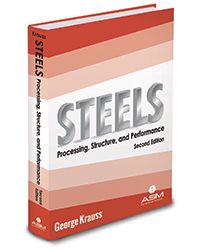
Steels: Processing, Structure and Performance, Second Edition A PDF of the text is included when taking this course.
WHO SHOULD TAKE THIS COURSE:
- Manufacturing personnel and engineers that specify steels and their heat treatment
- Steel company operating personnel and sales engineers
- Heat treatment managers
- Heat treatment personnel
- Heat treatment operators
- Metallographers
- Forensic laboratory personnel
- Failure analysts and trouble shooters
- Quality control personnel
LEARNING OBJECIVES:
Upon completion of this course, participants will be able to:
- Recognize the microstructural components of heat treated steels, their formation, and how they determine mechanical properties and performance as a function of carbon and alloy content
- Determine the effects of temperature during austenitizing and tempering and other heat treatment parameters on developing hardness and mechanical performance
- Evaluate causes of cracking and low performance of heat treated steels
- Enhance ability to select, manufacture, and heat treat steels for demanding applications
SUGGESTED PREREQUISITES
Previous participation in Metallurgy for the Non-Metallurgist™ or other Heat Treatment courses are helpful.
Continuing Education Units: 2.0
You will have 12 months to complete the course from the time you register.