

Scanbot streamlines materials research with STM automation
October 24, 2024 Source: ASM International
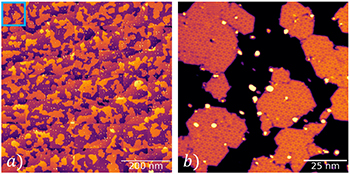
Researchers at Monash University (Melbourne, Australia) developed a new open-source software package that aims to significantly streamline the study of materials using scanning tunneling microscopes (STMs). The software, named Scanbot, automates the time-consuming probe optimization and data acquisition processes essential for STM experiments, helping to accelerate 2D materials research by enabling detailed investigation after the STM tip has been automatically optimized and sharpened.
STMs are powerful tools that allow atomic-scale exploration and characterization of material surfaces, but considerable time must be spent optimizing the instrument.
Exploring and characterizing the atomic landscape of surfaces has become a fundamental pursuit in modern science. STMs are among the most powerful tools that let scientists probe and interact with the world at this unimaginable scale, providing images and spectroscopic data that enable us to peer into the quantum realm and see how materials behave at the atomic level.
Julian Ceddia, lead researcher on this Monash University team, explains that a revelation came to him after getting tired of the hours he routinely wasted optimizing and sharpening the STM tip just to get meaningful data. “After countless hours spent fine-tuning the STM during my Ph.D., I discovered that the quality of the probe could be easily quantified by imaging imprints that the it leaves behind after being poked just a few angstroms into the surface,” Ceddia says.
These imprints carry information about the arrangement of atoms at the tip of the scanning probe and are key to predicting how good the data will be before acquiring it. “Basically, sharper tips leave behind smaller imprints. Scanbot automates the process by repeatedly pressing the tip into the surface until the imprint shows that the tip is sharp enough for high-quality imaging,” Julian explains.
This straightforward approach to ‘tip shaping’ avoids many of the challenges associated with using machine learning for similar tasks. “Instead of training an AI on vast amounts of labelled data to recognize high-quality images, Scanbot uses simple algorithms to measure the size and symmetry of the probe apex based on the imprints it leaves,” adds Dr. Benjamin Lowe, a key collaborator on the project.
But Scanbot’s capabilities extend beyond just tip shaping. It also automates common data acquisition techniques, such as sample surveying, making STMs easier to operate overall. “My goal with Scanbot was to make STM more accessible and user-friendly,” says Julian. “That’s why I invested a lot of time into designing an intuitive user interface and writing comprehensive documentation.”
The paper detailing Scanbot’s development and applications was published in The Journal of Open-Source Software (“Scanbot: An STM Automation Bot”).
Image –Scanbot autonomous survey: a) An autonomous survey of a 2D metal-organic framework comprised of 49 STM images in a 7×7 grid stitched together, acquired by Scanbot after it prepared a ‘good STM tip’ automatically. b) A single STM image extracted from the automated survey (blue box in a)). Courtesy of FLEET.
************
For more information:
ARC Centre of Excellence in Future Low-Energy Electronics Technologies
Subject Classifications
Materials Characterization
Metallography and Microstructures
news
News Articles
Testing and Characterization


